The existing multilateral order is under increasing pressure amid shifting political, economic and military balances. These geopolitical changes also reverberate in African-European relations. Various African countries have criticised the current state of multilateralism for perpetuating global power imbalances. This criticism is also echoed in the higher education sector, with active discussions and concrete, actionable measures aimed at fostering equitable partnerships.
At the same time, the demand for African-European scientific cooperation continues to rise. Thus, rather than signalling disengagement or a simple reorientation towards China and Russia, the voiced criticism opens pathways for reimagining equitable, resilient partnerships. This presents valuable opportunities to enhance partnerships and revitalise new cornerstones of a rules-based multilateralism that can position Europe not only as a reliable but also as a strategic partner for African states in a complex geopolitical environment.
Given shared challenges such as climate change, migration and pandemic prevention, it is in both continents‘ interests to maintain, strengthen and diversify scientific relations. In this context, emerging strategies and practical approaches emphasise new cooperation models between the African and European higher education sectors. Examples include the “AU-EU Innovation Agenda”, the “Africa Charter for Transformative Research Collaborations” and the German Commission for UNESCO’s position paper “Equitable Scientific Cooperation Worldwide”. These embrace recommendations such as the co-creation of inclusive programmes in science, innovation, education and training that mutually benefit partners from the African Union as well as those from the European Union.
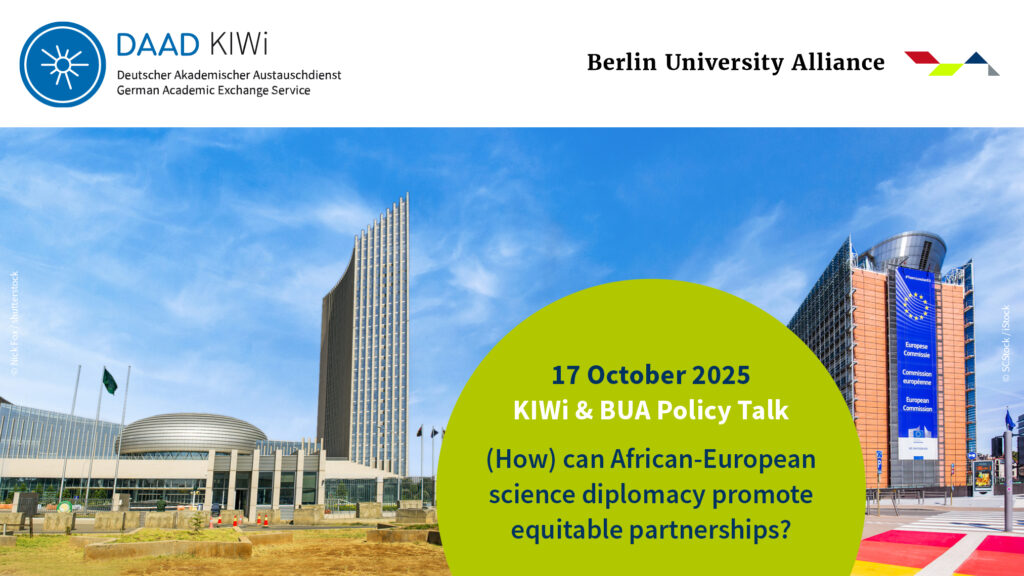
The opportunities of equitable African-European partnerships in research and higher education, as well as the role of science diplomacy as a facilitator, will be explored at the KIWi Policy Talk titled:
“(How) can African-European science diplomacy promote equitable partnerships?”, organised in collaboration with the Berlin University Alliance.
The Policy Talk will bring together experts from Africa and Europe to address the following questions:
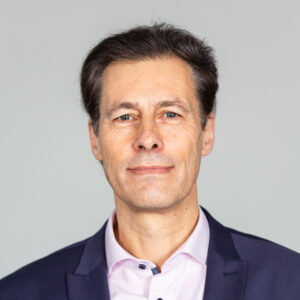
Dr Michael Harms is Deputy Secretary General of the DAAD and oversees the DAAD’s Berlin Office.
Prior to assuming his current position in January 2022, Dr. Harms held various management roles within the DAAD, including Director of Communications (2015–2021), Director of the Program Department South (2014), and Director of the Regional Office Cairo (2010–2014).
From 2006 to 2008, he was Head of the Department for International Cooperation of the German Rectors‘ Conference. He also spent several years teaching at univer- sities in Germany (Ruhr University Bochum, 1997-1998) and the UK (University of East Anglia, Norwich, 1993-1997).
Dr Harms received his doctorate in Language Learning Research from the Ruhr University Bochum in 2003. He studied History, English Language and Literature, and German Linguistics at the CAU Kiel.

Yolanda Rother (she/her) is co-founder of „The Impact Company“, a diversity, audience and culture consultancy. She moderates and speaks on topics related to digital society, politics and open government, diversity and sustainability. The Berlin native is a graduate (Master of Public Policy) of the Hertie School and has lived in Brazil, France and the United States.

Boris Heinz is Professor of Community Energy and Adaptation to Climate Change at the Technische Universität Berlin, Germany. He also serves as Head of Programme at the NGO Hudara in Berlin. Boris Heinz combines his academic work with extensive practical experience, having previously worked for the United Nations in New York, first as an Associate Expert in Economic and Social Affairs and later as a Subject Matter Expert for Field Projects with various stays in countries of the Global South. He has also been a Lecturer at the El Gouna Graduate School in Egypt. He holds a PhD from the Technische Universität Berlin. His research areas include sustainable community energy, community-based adaptation to climate change in remote and displacement contexts, and bottom-up community approaches originating from local needs and requirements.
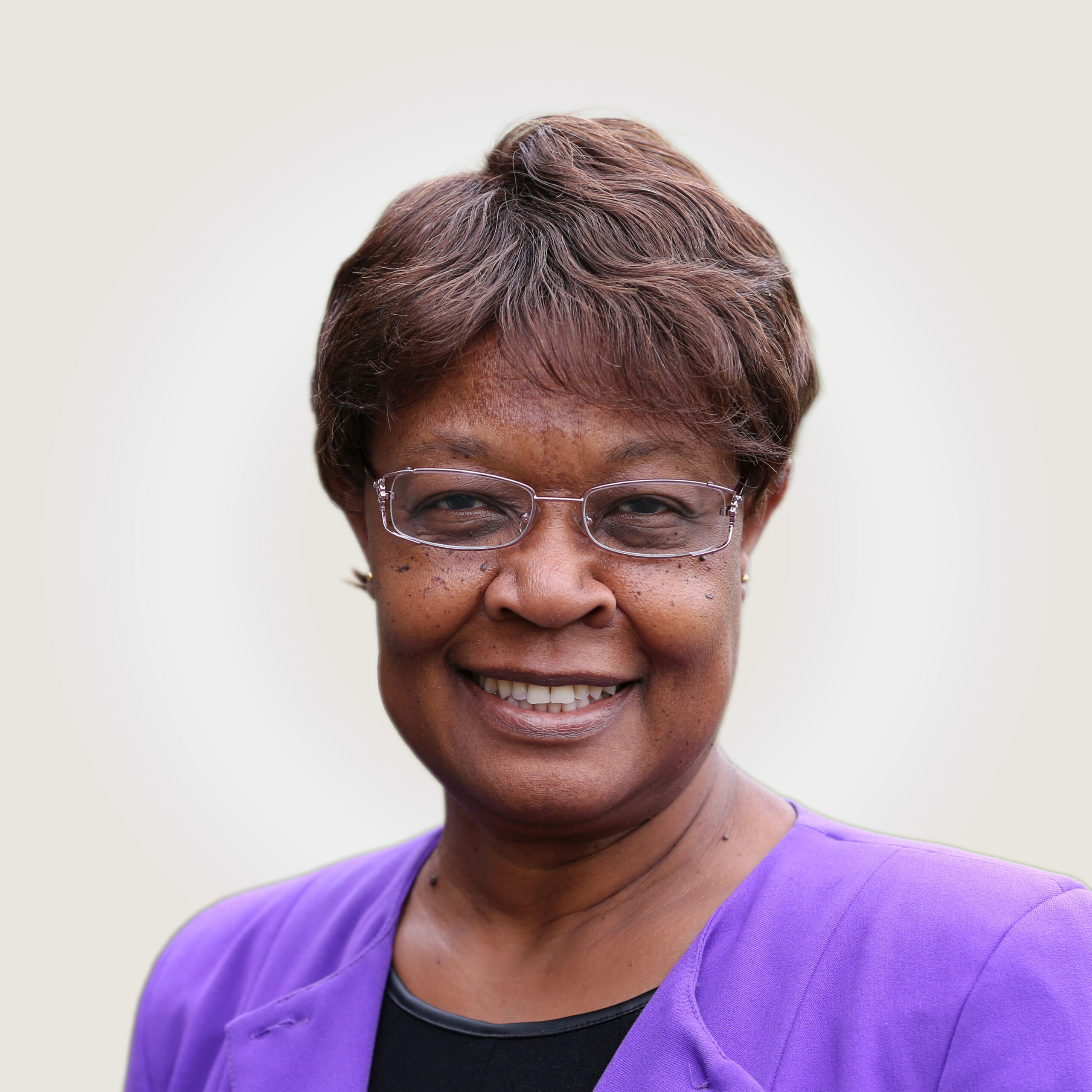
Juliet Thondhlana is Professor and UNESCO Chairholder in International Education and Development as well as Coordinator of the Association of African Universities Europe Regional Office at the University of Nottingham. She has wide-ranging experience researching and publishing in the interlinked fields of the internationalization of higher education, curriculum, research, and doctoral training; global partnerships; policy development, implementation, and review; decolonisation; and skilled migration. Her publications include several journal articles in high-impact journals, refereed book chapters, refereed edited books, special issues, conference papers, and policy documents. She is the lead editor of the ground-breaking Bloomsbury Handbook of the Internationalisation of Higher Education in the Global South, as well as lead guest editor of the Journal of the British Academy Issue “Repositioning of Africa in knowledge production: shaking off historical stigmas.” She is co-Editor of the Journal of Teachers and Teaching: Theory and Practice and sits on editorial boards of high-impact journals.
„Hochschulperspektiven aus den Niederlanden, Österreich und der Schweiz“


© Stefan Zeitz
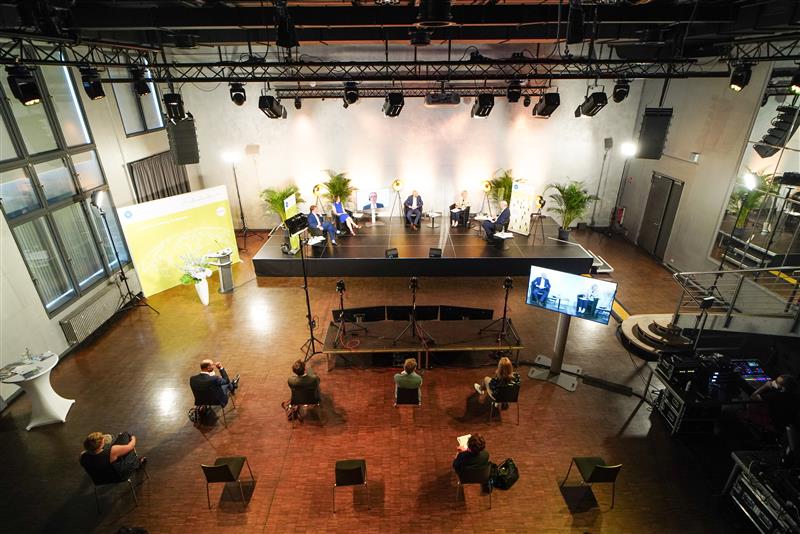
Der KIWi Policy Talk bietet ein sichtbares Forum für den Dialog, um Vertreterinnen und Vertreter aus Hochschule und Politik in den Austausch zu bringen und aktuelle Fragen der internationalen Wissenschaftskooperation kritisch zu diskutieren.
Klicken Sie auf den Button, um die Aufzeichnungen vergangener Events anzuschauen.
The KIWi Policy Talk offers a visible forum for dialogue, bringing university representatives together with policymakers to discuss and critically reflect on current issues in international academic cooperation.
Click the button to view recordings of past events.